19 Mar
Why Architects Specify Epoxy Grout for Luxury Bathrooms and Kitchens in Dubai Hotels
The defects liability period on a luxury hotel in Business Bay had barely ended when the facilities team raised the first complaint: grout lines in the guest bathroom were wet, and walls were discoloring. Not one room. Seventeen.
The tile specification was impeccable. Rectified porcelain, precision-laid, perfectly aligned. The grout, standard cement-based, correctly colored, and professionally applied, had absorbed eighteen months of steam, daily chemical cleaning, and humidity cycling. It looked tired in a space designed to look permanent.
The architect knew immediately: the tile grout had been an afterthought on the specification sheet. It rarely is, after a situation like that.
The Specification Decision Most Teams Get Wrong
In luxury hospitality fit-outs, grout is often specified late, sometimes delegated to the contractor, or defaulted to whatever the tile supplier recommends. For a villa bathroom or a low-turnover apartment, that approach is low-risk. For a Dubai hotel bathroom that will be cleaned twice daily with industrial chemicals, or a commercial kitchen running 18-hour service cycles, it is a liability.
Cement-based tile grout is inherently porous. In residential settings, porosity is manageable. In a five-star hotel wet room with continuous steam, aggressive cleaning agents, and near-zero drying time between guest turnovers, it becomes a structural weakness. Moisture enters the joint, works behind the adhesive layer, and the visual degradation that follows is not a maintenance issue. It is a specification failure.
This is the conversation that has pushed epoxy grout to the top of the specification list for hospitality and commercial kitchen projects across Dubai.
What Epoxy Grout Actually Does Differently in Commercial Environments
The performance gap between premium tile grout based on epoxy resin and standard cement grout is most visible in exactly the conditions that Dubai’s hospitality sector creates daily.
Epoxy grout cures into a fully non-porous surface. Moisture cannot enter the joint, which means the adhesive layer beneath the tile stays intact; mould cannot form within the grout bed, and cleaning chemicals do not gradually degrade the material. The color remains stable across years of industrial cleaning, not months.
For commercial kitchen applications specifically, epoxy grout resists the grease penetration, acidic food contact, and high-pressure hot water cleaning that cement grout deteriorates under. Dubai’s HACCP-compliant kitchen environments require surfaces that can be cleaned aggressively and repeatedly; epoxy grout is the only tile joint material that holds up to that standard long-term.
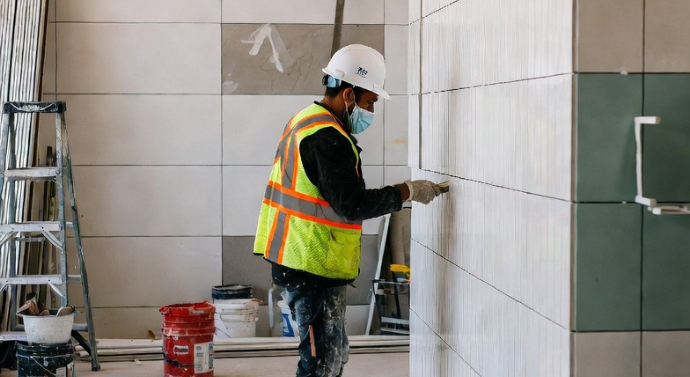
At Tile Guru, we install Litokol Starlike Pro across hotel bathrooms, spa wet rooms, and commercial kitchen fit-outs throughout Dubai. It carries EN 13888 classification for chemical resistance and is specified by name on projects where the grout joint is treated as a performance component, not a filler material.
The Environments Where This Matters Most
Based on the hospitality and commercial projects we work on across Dubai, the highest-risk environments for cement grout failure and the strongest case for epoxy specification are:
- Hotel guest bathroom wet walls and shower floors, daily chemical cleaning, steam exposure, zero dry time between turnovers
- Commercial and hotel service kitchens, grease contact, acidic cleaning agents, high-pressure washing, and HACCP compliance requirements
- Spa steam rooms and hydrotherapy areas continuously produce moisture that cement grout cannot withstand long-term
- Pool surrounds and outdoor terraces UV exposure, chemical treatment, thermal cycling between Dubai’s day and night temperatures
For pool installations specifically, our swimming pool grouting service applies the same epoxy system in a fully submerged environment, the most demanding application of all.
What Architects Should Ask Before Signing Off the Grout Spec
If you are finalising a specification for a luxury hotel, serviced apartment, or commercial food service environment in Dubai, these are the questions worth asking before the grout line is filled:
- Is the grout system rated for continuous moisture exposure and chemical cleaning cycles?
- Does the product carry independent certification for the specific environment of a commercial kitchen, pool, or steam room?
- Is the installer experienced with epoxy application in Dubai’s ambient temperature conditions, where working windows are shorter?
- Has the contractor applied this product on comparable hospitality projects, or are they adapting from residential experience?
The answers determine whether the grout holds up through the defect’s liability period and well beyond it. Our epoxy grouting service page covers how we approach each of these questions on every commercial project we take on.
If you are also specifying grout for the broader luxury development residential towers, villa fit-outs, or premium retail, our guide on why Dubai’s luxury developers are switching to epoxy grout covers the same performance principles applied outside the hospitality context.
Specify With Confidence: Talk to the Installation Team First
The most effective point to involve a specialist grout installer is at the specification stage, not after the tiles are laid. We work with architects, interior designers, and main contractors across Dubai’s hospitality and commercial sector, providing product guidance, sample approvals, and project-specific installation planning before a single joint is filled.
Book a specification consultation with Tile Guru, call 800 3789, or WhatsApp our team directly. We will recommend the right premium tile grout system for your project environment and give you the technical details you need to specify with confidence.